
An Ode to the Gambiarra
Epistemologies of Design and What That Means
Across (Creative) Borderlands
by Luma Guarçoni
Introduction
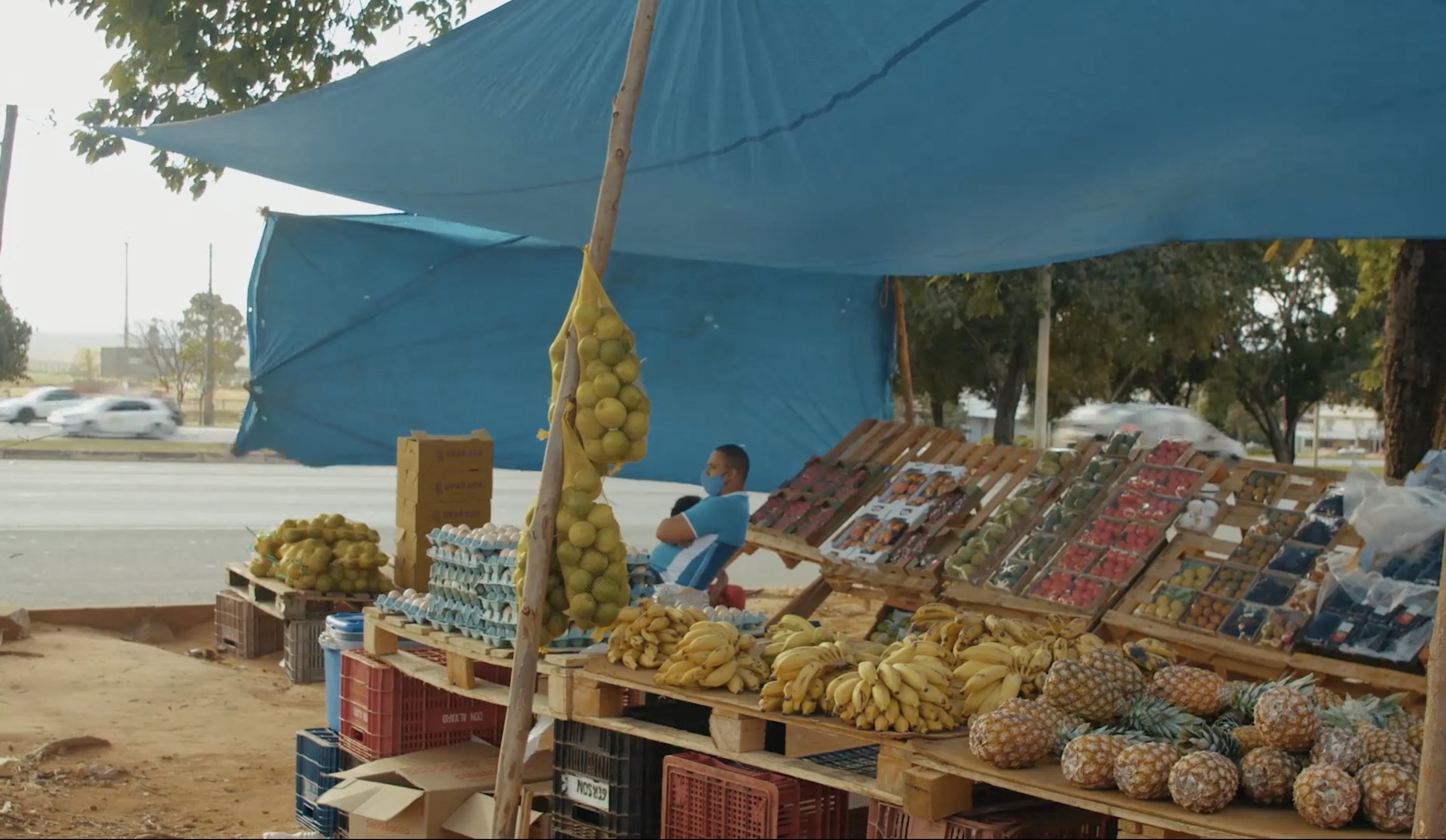
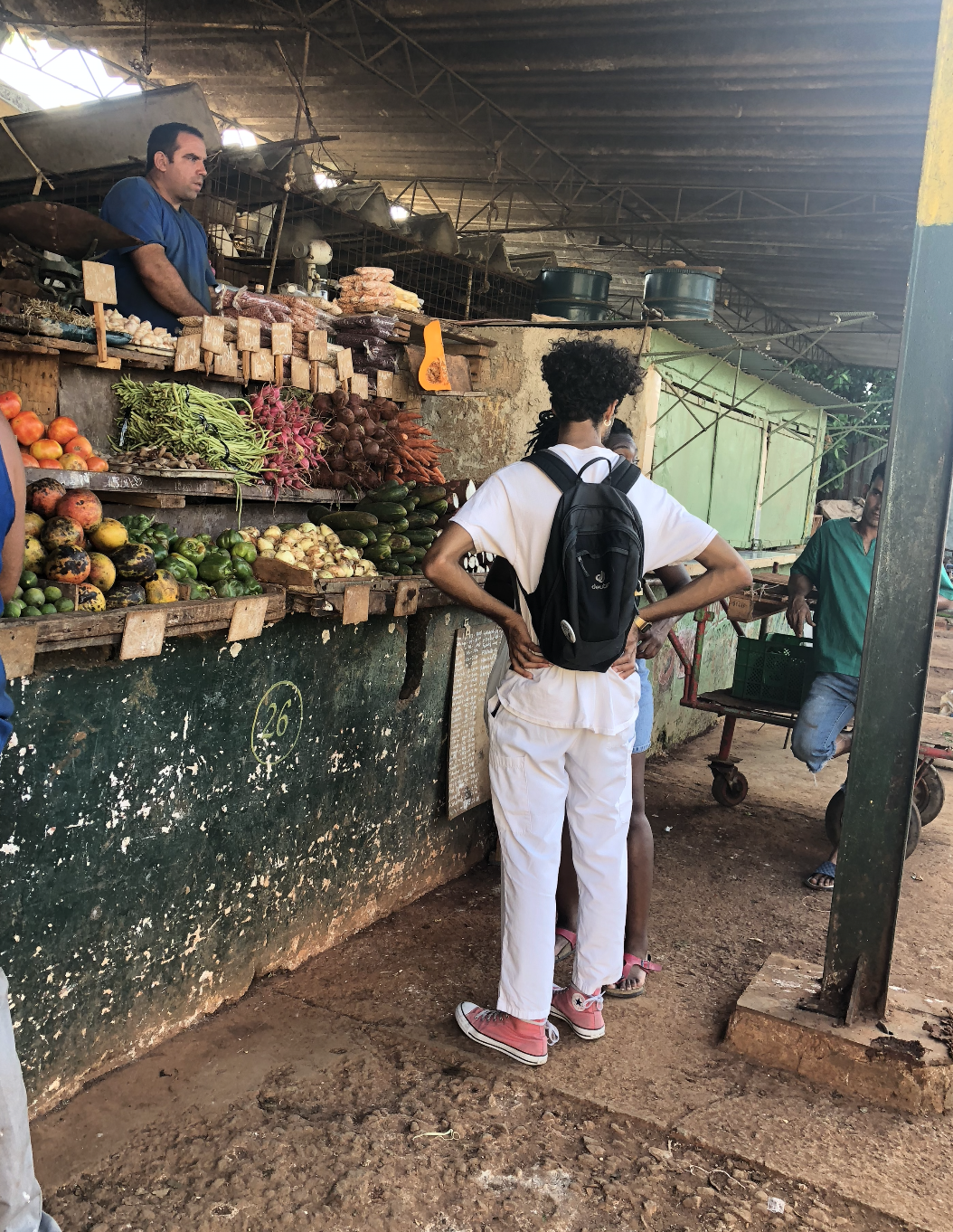
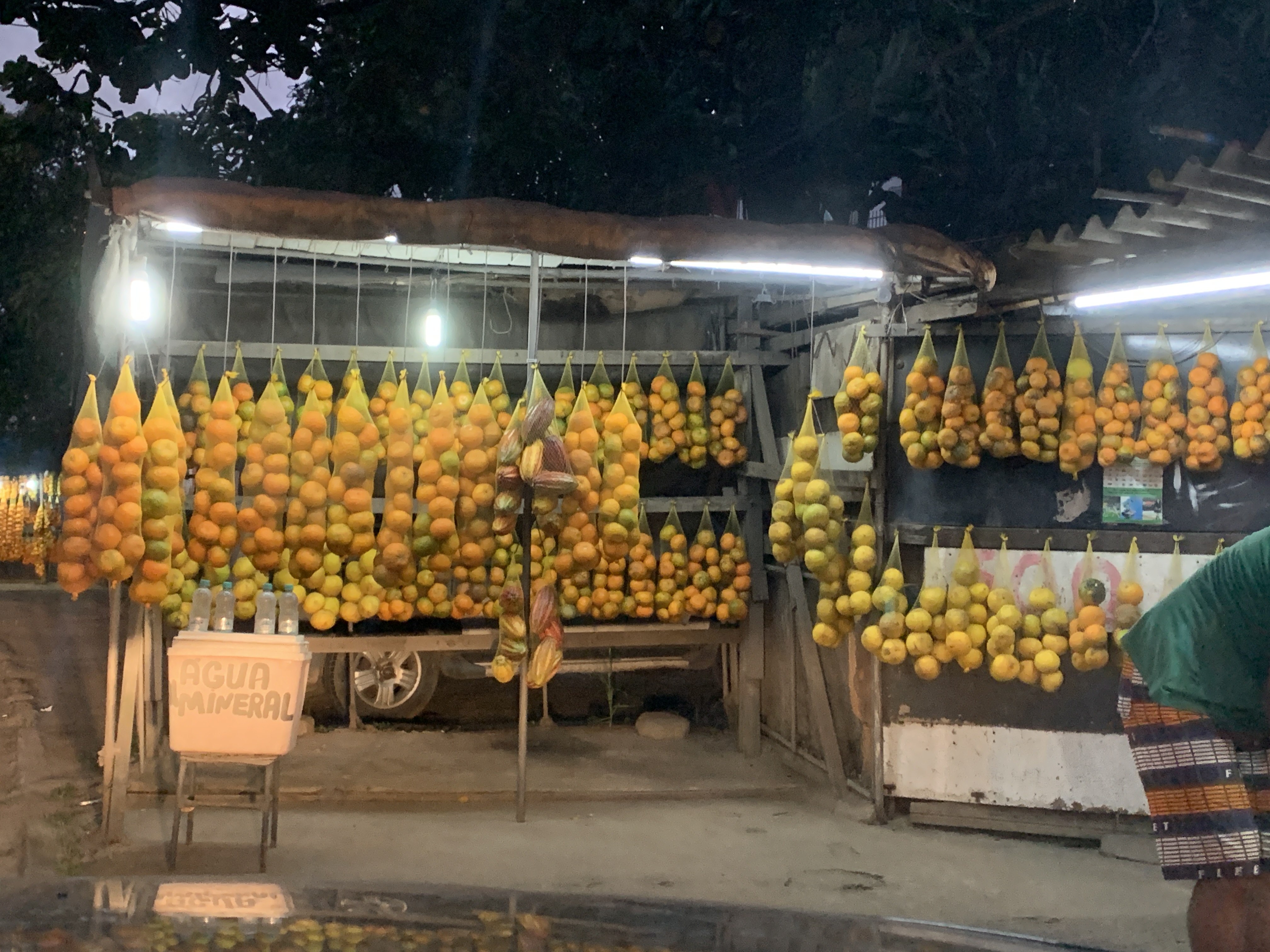
I have always been fascinated by this idea of The Designer—who gets to inhabit that space and who can claim that title for themselves? Why is it used so freely within a specific homogenous group of people adjacent to certain cities, institutions, professions, and classes, yet so strongly withheld from others that exist outside those realities? Sometimes walking the streets of Brasil(*) I believe I cross paths with more designers at heart than I ever will walking the halls of many design institutions around the world. Seeing street vendors' resourcefulness and creativity when they have to organize their moving storefronts or the neighborhood’s inventor’s ingenuity when they could not afford a windshield sunshade brings the word “innovation” to mind much quicker than the slight variation on a century old monogram designer bag.


Inspired by the question ‘what is a designer?’ I will be exploring ideas of what I call ‘epistemologies of design’ and what that means across (creative) borderlands. In Chapter 1 I will delineate what the term ‘epistemologies of design’ means, what the dominant epistemology within the field of design currently is (Escobar, 2018), its connection to colonial imposition and globalization (Fry and Kalantidou, 2018) and how it rose to prominence and established what Mignolo calls ‘epistemological totalitarianism’ (2018). In Chapter 2 I will be looking at ontological design (Willis, 2006) in order to interpret ‘Gambiarra’ as a potential counter-narrative to the Anglo+Eurocentric hegemonic approach to design, exploring the socioeconomic context from which it emerges and what the spontaneity of this practice can teach us. Finally in Chapter 3 I will dive into notions of (*)Brasil vs Brazil (Blanc and Tapajós 1978; Karentzos, 2019), present a trend of classically trained artists returning to Gambiarra as a type of ‘creative homecoming’, how that can represent a resistance towards a deeply ingrained colonial mentality and what that signifies within the context of a national creative identity for Brasil.


The main goal of this dissertation is to present Gambiarra—a non-western practice of design—as a legitimate and valuable creative process and thus gain insight into what can be learned when different epistemologies of design are taken into account and respected. I hope this paper will contribute to discussions of decoloniality in the field of design by allowing us to see (non-geographical) (creative) borderlands as fertile grounds for the encounter of different perspectives. Perhaps we can let ourselves go even further and imagine ‘borderland designers’ as creators that would incorporate multiple epistemologies of design within their own practice and possibly show us an alternative path forward.
“Living in a state of psychic unrest, in a Borderland, is what makes poets write and artists create.”
—Anzaldúa, 1987, page 73


In order to understand and expand our notions of ‘epistemologies of design’ I will begin by briefly defining the term ‘epistemology’ and then applying it to the context of design. I will borrow ideas proposed by Escobar (2018) in his book “Designs for the Pluriverse: Radical Interdependence, Autonomy, and the Making of Worlds” to outline what the most dominant practice of design currently is. Through Escobar’s work we will analyse how this hegemonic narrative stems from a functionalist, rationalistic, industrial tradition and exists to perpetuate western patriarchal capitalist modernity focused on production and consumption (Escobar, 2018). We will then use Mignolo’s concept of ‘epistemic totalitarianism’ (2018) and Fry and Kalantidou’s ‘epistemic colonialism’ (2014) to explore how this Eurocentric iteration of design has established itself as supreme and suppressed other realities and forms of knowing. Fry and Kalantidou’s “Design on the Borderlands” (2014) also provides an incisive critique of the role of globalization in perpetuating the hegemonic practice of design while simultaneously making explicit the connection between colonial inquisition and the Eurocentric capitalist monopolization of the design field.
Following, we will explore Willis’s definition of ‘ontological design’ (2006)—which refers to the continuous reciprocal influence we exert over the things we design and that they exert over us—and through those lenses I will introduce the concept of Gambiarra—a creative process built on the act of improvisation and subversion of designed objects in order to better respond to a different set of necessities (Naumann Boufleur, 2013)—as a counter-hegemonic practice. Before moving forward we have to reconcile a conceptual contradiction between Willis’s emphasis on planning being a key aspect of designing and Gambiarra’s penchant for spontaneity and improvisation.


To dive deeper into this argument, we will be referencing two PhD theses from the School of Architecture and Urbanism at the University of São Paulo: Moura Wanderley’s “The Design of the ‘Others’: Creative interactions in contemporary artifact production” and Naumann Boufleur’s “The Fundaments of the Gambiarra: the utilitarian contemporary improvisation and its socioeconomic context”. Both works pose profound investigations into notions of vernacular design and its production while also offering remarkable perspectives regarding its occurrence within society, its socioeconomic context and its cultural embeddedness.
In the subsequent chapter we build on top of those academic analyses of Gambiarra and turn to more creative explorations into the theme. We will briefly look at the complex power dynamic between the concepts of (*)Brasil vs Brazil through the lyrics of “Querellas do Brasil” by Blanc and Tapajós (1978) and how the practice of Gambiarra fits into that scenario. I will then reference the 2020 film “Gambiarra” by the collectives Brazil 1,99 and Seconds Media for an insight into its omnipresent cultural relevance by drawing from interviews they have conducted on the field as well as the writings they have published alongside it on their social media platforms. In this section I will also be providing other works by ‘classically trained’ artists that have turned to Gambiarra with appreciative eyes such as Cao Guimaraes, the Campana Brothers and myself. Lastly, I will juxtapose Gambiarra with a pivotal historical point in the attempt at developing a creative national identity in Brasil, de Andrade’s 1928 Anthropophagic Manifesto, and argue how Gambiarra might offer us an infinitely more authentic solution to that quest.

Throughout the entire research the concepts of ‘non-geographical borderlands’ as presented by Anzaldúa in her book “Borderlands/La Frontera: The New Mestiza” (1987) and ‘border thinking’ as indicated in Mignolo’s writing of ‘epistemic differential’ (2018) are present in the background. Those two concepts set the terrain in which this investigation into ‘epistemologies of design’ happens. As the dissertation goes on it becomes evident how theories of knowledge are inextricably linked to cultural and socioeconomic contexts and we look to Anzaldúa and Mignolo for guidance to explore how different expressions of design manifest across (creative) borders. This will be made most noticeable in the conclusion when the gap between the exploration of different epistemologies meets the potentiality of a ‘borderland designer’ that can incorporate multiple realities within their identity and their practice; this might allow us to envision a decolonial practice of design that permits multiple worlds to flourish (Escobar, 2018).
“Queremos un mundo donde
quepan muchos mundos
(We want a world where
many worlds fit)”
—Zapatistas de Chiapa quoted in Escobar, 2018, page 15
To guide this investigation, I will use an auto ethnographic approach to reconcile academic research on the theme and my own experiences. I will do so by utilizing journal entries, poems, personal observations, and actively inserting my perspective in the development of this paper. By taking into account my own personal experience of living and working within two separate realities—between my academic design education and professional experiences in the United States and Europe over the past decade and my personal roots and recent year-long creative venture in Brasil—I hope to offer contrasting points of view that reflect a plural perception of the discussion at hand and my contributions at navigating through them. As a person who inhabits spaces in the Global South and Global North simultaneously and has a dual identity as a creator, I will speak both as an agent and as a witness to different means of cultural production and design practices.


on set of Comunidad(e) (Guarçoni, Alba, Monestier 30 Apr 2018, NYC)
“She learns to juggle cultures… She has a plural personality, she operates in a pluralistic mode.”
—Anzaldúa, 1987, page 79
This visual essay will use photographic data from my personal archive to exemplify this form of spontaneous design both directly and indirectly. Through illustrating how Gambiarra is a fundamental manifestation of an ‘epistemology of design’ characteristic to the Global South, and specifically Brasil in this case, I will be pointing at how this iteration of creative expression has been excluded from the hegemonic Eurocentric narrative of design and what we stand to gain from legitimizing it as a creative process.


Conclusion
The initial objective of this paper was to explore the notion of ‘epistemologies of design’ in order to better understand how design is practiced differently across cultural and socioeconomic contexts and, consequently, gain insight into what can be learned when multiple epistemologies are taken into account and respected. It sought to advocate for the Gambiarra as a legitimate and valuable creative process; to recognize non-western practices of design that take place in the margins of capitalism (Naumann Boufleur, 2013) as counter-narratives to the Anglo+Eurocentric hegemony in the design field; and to understand these practices as forms of resistance to current neocolonial thought and a fundamental tool in the process of decoloniality.

Though in the last chapter I positioned Gambiarra as a genuine expression of a national creative identity in Brasil, in this conclusion I would like us to reframe that analysis through the lenses of Anzaldúa’s ‘non-geographical borderlands’ (1987) and Mignolo’s ‘border thinking’ and ‘epistemic differentials’ (2018).
“The epistemic differential between regional knowledges taken for the totality and regional knowledges disavowed by stakeholders of the totality of knowledge, makes the question of epistemic totalitarianism visible and border(-dwelling and -thinking) epistemologies unavoidable and necessary”
—Mignolo, 2018, page 208
Both Anzaldua (1987) and Escobar (2018) speak of dualities as a notion of the West—binaries imposed during colonization to establish power and dominance—and embrace ideas of non-dualist realities as a rich tradition on non-western cultures—ways of being, thinking and doing that appreciate the complexity of our existence. Mignolo helps us understand non-dualist ontologies as characteristic of border-dwellers (2018) and since, according to Anzaldúa, borderlands are not physical spaces but more so a state of being we can then extrapolate beyond the tangible and towards the idea of creative borderlands.
“A borderland is a vague and undetermined place created by the emotional residue of an unnatural boundary. It is in a constant state of transition.”
—Anzaldúa, 1987, page 3
 Author’s hands after studio – acrylics, artist tape, paint (Guarçoni, 15 Apr 2017, Brooklyn)
In those creative borderlands we might find a different type of designer, a ‘borderland designer’, an individual who embodies the cultural collision that Anzaldúa argues so fertile for creative production (1987). They incorporate multiple design epistemologies simultaneously within their own practice and open the path to a design field that is growing towards decoloniality. Mignolo claims that border-thinking and border-epistemologies emerge on colonial subjects when they realize the extent to which their epistemologies have been suppressed and that the moment this realization sets in is also the moment they start to become ‘decolonial subjects’ (2018). It is in this way that it becomes fundamental to not try to fit western definitions but to create our own terminology and designations for creative endeavors.
Sobande stated that “becoming comfortable with the label of ‘academic’ is an ongoing process for me” (2018) and that resonated deeply with the discomfort I feel when having to call myself a designer despite studying and working in the field for over a decade. After this investigation I have come to the conclusion that maybe the problem isn't how we feel about those terms but the parameters in which those terms are presented to us in the context of the ‘epistemic totalitarianism’ promoted by the Eurocentric hegemonic narrative predominant in western institutions (Mignolo, 2018).


“Until I am free to write bilingually and to switch codes without having always to translate, while I still have to speak English or Spanish when I would rather speak Spanglish (...) my tongue will be illegitimate.”
Lorde stated, “the master's tools will never dismantle the master's house” (1985, pp 2) and I argue that neither will design practices rooted in Eurocentric capitalist colonial values dismantle the hegemonic narrative that have repressed other epistemologies for so long. Therefore, an investigation into design epistemologies proves necessary to envision a pluriversality of ontologies—“a world where many worlds fit” (Escobar, 2018).
Bibliography
About the Artist

Luma Guarçoni is a Brazilian fashion designer and researcher currently based in Vitória, Brasil. She started her fashion education over a decade ago at Design and Architecture Senior High in Miami, Florida and since she has lived in Milan, Paris, London and New York working for brands such as Marni, Acne Studios, Hood by Air and others while also pursuing her degree in fashion design and marketing at Central Saint Martins in London. Throughout her work Luma explores questions of identity by investigating the dynamics between culture and the body as a place of political and social expression. She is currently developing her graduate collection centered on the potential of the integration of traditional Brazilian artisanal techniques into the context of high luxury and, consequently, how the fashion industry and its large production chain could be reimagined as a tool for social progress. Simultaneously Luma is studying notions of epistemologies of design rooted in the Global South, more specifically Brasil, as counter narratives to hegemonic methods of creative production propagated by the Global North. Through this line of thought she now presents the concept of Gambiarra and ties it to the fields of decoloniality and border thinking.
Key words: Gambiarra, border thinking, decoloniality
Key words: Gambiarra, border thinking, decoloniality
An Ode to the Gambiarra
Chapter 1—Epistemologies of Design
Before this dissertation can go anywhere new, it is fundamental to clearly establish what exactly is meant by epistemologies of design. Epistemology is, in broad terms, the branch of philosophy concerned with the theory of knowledge, especially regarding its nature, source, methods, validity and scope (DeRose, 2005). The way I will use this terminology throughout the paper is to refer to the theory of knowledge and worldview from which specific practices of design emerge from—and therefore embody—and to investigate how those epistemologies came to be dominant in the field through what Mignolo calls ‘epistemic totalitarianism’ (Mignolo, 2018).
This line of inquiry, particularly the source and validity of knowledge, will serve to map out, analyse and understand what epistemology informs our dominant design practice and later to propose a new epistemology of design based on a different socioeconomic context. By applying the lens of epistemology over the practice of design I hope to make evident that any form of design or creative expression (or any action for that matter) emerges from a specific body of knowledge and way of relating to the world (Willis, 2006).

“To put it differently, all creation is collective, emergent, and relational; it involves historically and epistemically situated persons (never autonomous individuals)”
—Escobar, 2018, page XVI
Once we begin to see any form of creative manifestation as an output of a set body of knowledge, questions begin to surface: what has shaped that particular body of knowledge? What is the source of it? Where is it rooted? What perpetuates it? How does it evolve? There are deep and rich answers to each of those questions that this paper cannot fully explore but woven into all of them would be something along the lines of culture and/or society (Mignolo, 2018). This might seem like an easy route or an overplayed cliché, but as feminist and decolonial thought over the past years have shown, the root of most oppression—and the perpetuation of such—is founded in society’s investment in the preservation of a specific hegemonic narrative. The fields of design and creative practices are by no means exempt from the influence of this invisible hand.
“The materiality of the world (its ontology) is shaped by epistemology (world sense projected into storytelling and argument [logos]) coded, in every culture and/or civilization, as knowledge (epistemology).”
—Mignolo, 2018, page 196
Escobar does a superb job of outlining what is the dominant narrative that permeates design and, in doing so, he has laid out what I see as the foundation of the epistemology which shapes the mainstream practice of design as it currently stands: Anglo+Eurocentric capitalist hegemony. Early in his book he makes frequent reference to patriarchal western capitalist modernity as the civilizational model that birthed the functionalist, rationalistic, industrial tradition of design that we find ourselves immersed in (Escobar, 2018). This sharp insight leads us to pinpoint where geographically and economically this form of design originated—namely the middle and upper classes of the Global North—and the systems which allowed it to flourish—industrial capitalism and patriarchal modernity.
Fry and Kalantidou’s book provide us with the arguments to investigate this idea further by helping us understand how this particular narrative became dominant and how it has kept the design field in a stronghold for so long. The authors openly address questions of design’s historical involvement with colonial imposition and discuss ideas of “epistemological colonialism” (Fry and Kalantidou, 2014) which have been monumental in helping me see the practice of exploring other epistemologies as an intellectual resistance to neocolonialism in the design field.
“Epistemological colonialism can be understood as a certain kind of viral afterlife of a progenitor; it goes on doing the job of colonisation long after the material trappings of its parental host have departed. As such it continues to extend key features of the values, mode of thought and worldview constituted as the colonised mind.”
—Fry and Kalantidou, 2014, page 16
Between the authors’s ‘epistemological colonialism’ and Mignolo’s ‘epistemic totalitarianism’ (2018) it becomes clear how a western imperial capitalist epistemology established itself as supreme over any other form of knowledge produced outside of that geographical space of mind and, consequently, stifled any ontology that endangered its dominance. Fry and Kalantidou then go on to speak about globalization in an illuminating manner by posing it not as a consequence of capitalism but as a tool used by it. The authors provide insightful views on economic colonization and how the ongoing depreciation of local epistemologies is strategically designed into the system of globalization.
“Globalization (...) destroys the counter-developmental potentiality of what is already present in the local (be they creative and craft practices, knowledge, farming and horticultural skills).”
—Fry and Kalantidou, 2014, page 16
From their work it becomes clear that design has been used to not only perpetuate but also propagate neocolonial ideas and values and therefore been an instrumental arm of globalization. Much like colonial rules that prohibited the expression of any form of cultural manifestation from the African continent in the Americas, the Anglo+European hegemony in design serves the same purpose of suffocating other epistemologies while imposing a false idea of supremacy by monopolizing the field (Fry and Kalantidou, 2014). This dynamic presents the “double face of modernity/coloniality” in the way that it consolidates “Eurocentrism as a system of interconnected knowledges” (modernity) while simultaneously “dismissing principles of knowing and knowledge created in non-European languages and non European systems of belief” (coloniality) (Mignolo, 2018, pp 197).
Once we understand that design practices are built from a specific theory of knowledge (epistemology) specific to the culture from which it came, it becomes quite obvious that different cultures have inherently different methods of practicing design (Krenak, 2019). That statement’s potential should invite us to dream of endless learning opportunities, and it would... if it were not for the hierarchy of epistemologies ingrained into us as practitioners and consumers which have disabled us from seeing different ontologies as rich and valuable (Mignolo, 2018). In order to begin to dismantle that hierarchy and its accompanying bias against different realities we might want to look at Franz Boaz’s original notes on cultural relativism;

Brasil/Babylon–communication tower na terra da Gambiarra. (Guarçoni, 24 Mar 2016, São Paulo)
“[Boaz] became convinced that all education is relative. All civilization is relative. All culture, in a way, is relative to a time and a place. What it means to be a full, mature adult, what it means to be smart, what genius is depends on when you're asking about it, where you're asking about it, the context you're asking about it in.”
—Charles King in Arablouei and Abdelfatah, 2020
An Ode to the Gambiarra
Chapter 2—Gambiarra, Another Ontological Approach


In order to start considering other epistemologies of design, a key term that must be understood is ontological design -a term with complex nuances and theoretically rooted in Heideggerian thought of notions or worlding and worldhood- which is, in its simplest form, what Willis calls “a double movement—we design our world, while our world acts back on us and designs us” (2006, pp 80) or as Escobar states: “ we design our world, and our world designs us back—in short, design designs.” (2018, pp 4). This implies a continuous mutual influence that we exert over our world and that our world exerts over us, not a one-time occurrence nor a one-way street but a reciprocal synergy of our constant development that goes much deeper than notions such as environmental determinism (Willis, 2006)
This can have something of a “chicken or the egg” dilemma in that it opens the space for us to question if we are a specific way because of the things we design; or; if we design those things because we are a specific way (Escobar, 2018); and although the continuous and mutual characteristic of ontological design should render that question null there is perhaps a more interesting line of thought to be pursued: are the things we design a reflection of who we are or are the processes by which we get there a more accurate window into the essence of a culture? (Moura Wanderley, 2013)
“Implicit in this question is the challenge to think of design as a process which, often, reveals itself more important than the final result given that it amplifies and potentializes the comprehension of objects and of the actions involved in their creation.”
—Moura Wanderley, 2013, page 17

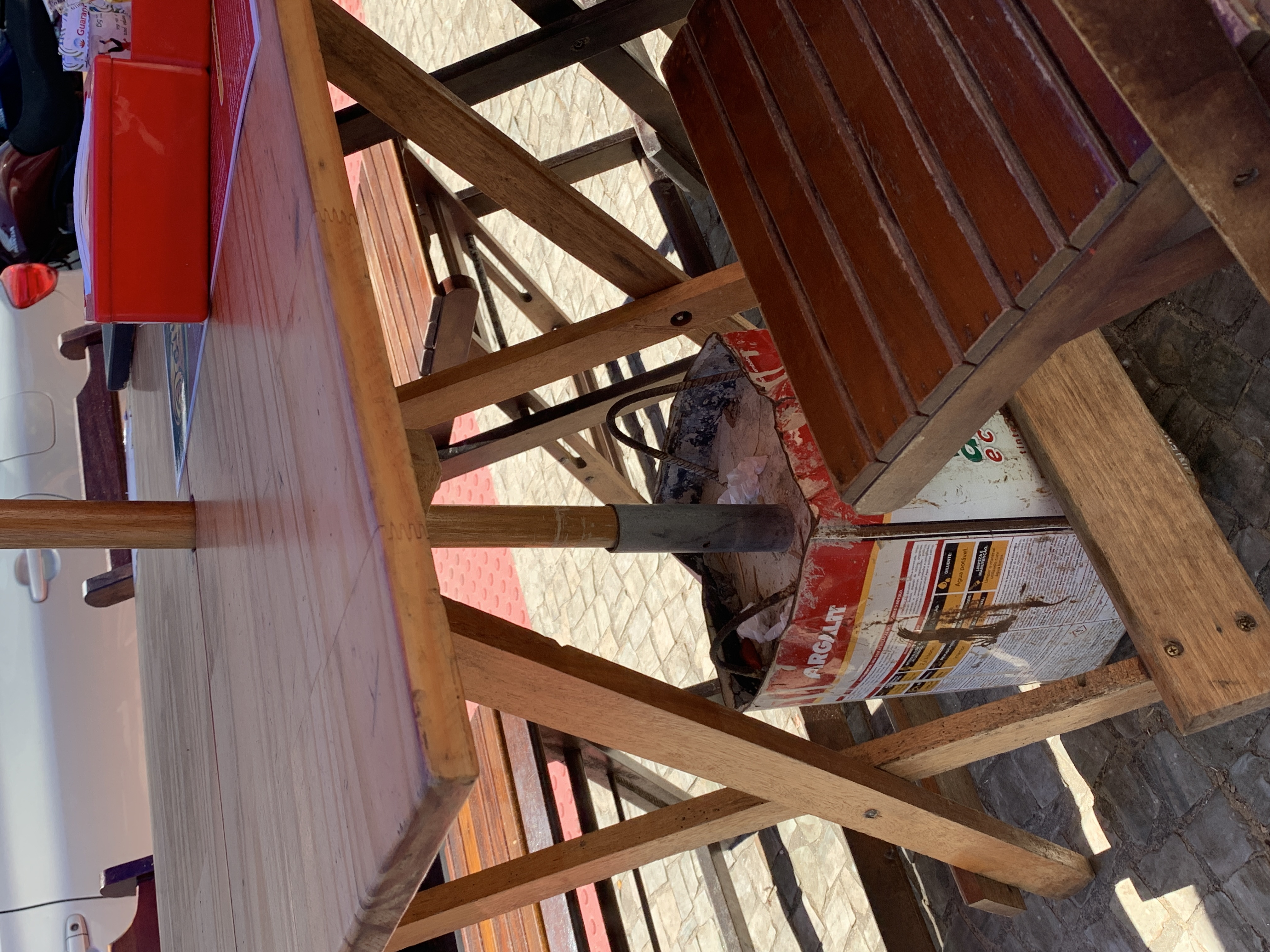
With that thought in mind I want to introduce Gambiarra—a word from Brazilian Portuguese that, in its most direct iteration, denotes a creative process of improvisation by which designed objects are subverted to address a different set of necessities (Naumann Boufleur, 2013). The term is actually much richer and invites an infinitely deeper exploration that goes beyond the ability of this paper, but some key points made by Naumann Boufleur are: 1) a subversion of the industrialized artefact post consumption, 2) the act of improvising material solutions with utilitarian purposes, 3) its response to an individual’s need vs that of society, and 4) its embeddedness in a particular socioeconomic context (2013).
Gambiarra is one of those cultural terms that is extremely difficult to define or translate because of its deep cultural roots, it signifies a creative process, but it goes a long way beyond that; it is an omnipresent spirit in the collective creative consciousness of a country, the most exciting manifestation do jeitinho brasileiro.

Broken window + tape = fixed window (Guarçoni, 25 Nov 2020, Vitória)
A popular definition is “Grande Artifício da Mecânica Brasileira Inventada para Arrumar, Recuperar, ou Realizar Algo” (Great Artifice of Brazilian Mechanics Invented to Fix, Recuperate or Accomplish Something) or as the narrator of the film “Gambiarra” (2020) explains “Gambiarras are resources used to resolve a problem, generally utilizing objects for functions which they were not originally projected to accomplish”.
Before we can assess whether Gambiarra could be considered a counter narrative to the hegemonic design epistemology of western patriarchal modernity (Escobar, 2018) we need to set parameters for that which we consider design to be. Since we are working within Willis’s definition of ontological design in order to recognize that design is not created from an objective point of view but more so a reflection of the world in which the creator inhabits (2006), then there is an important concept that we must reconcile with if we are to legitimize the Gambiarra as a valid practice.

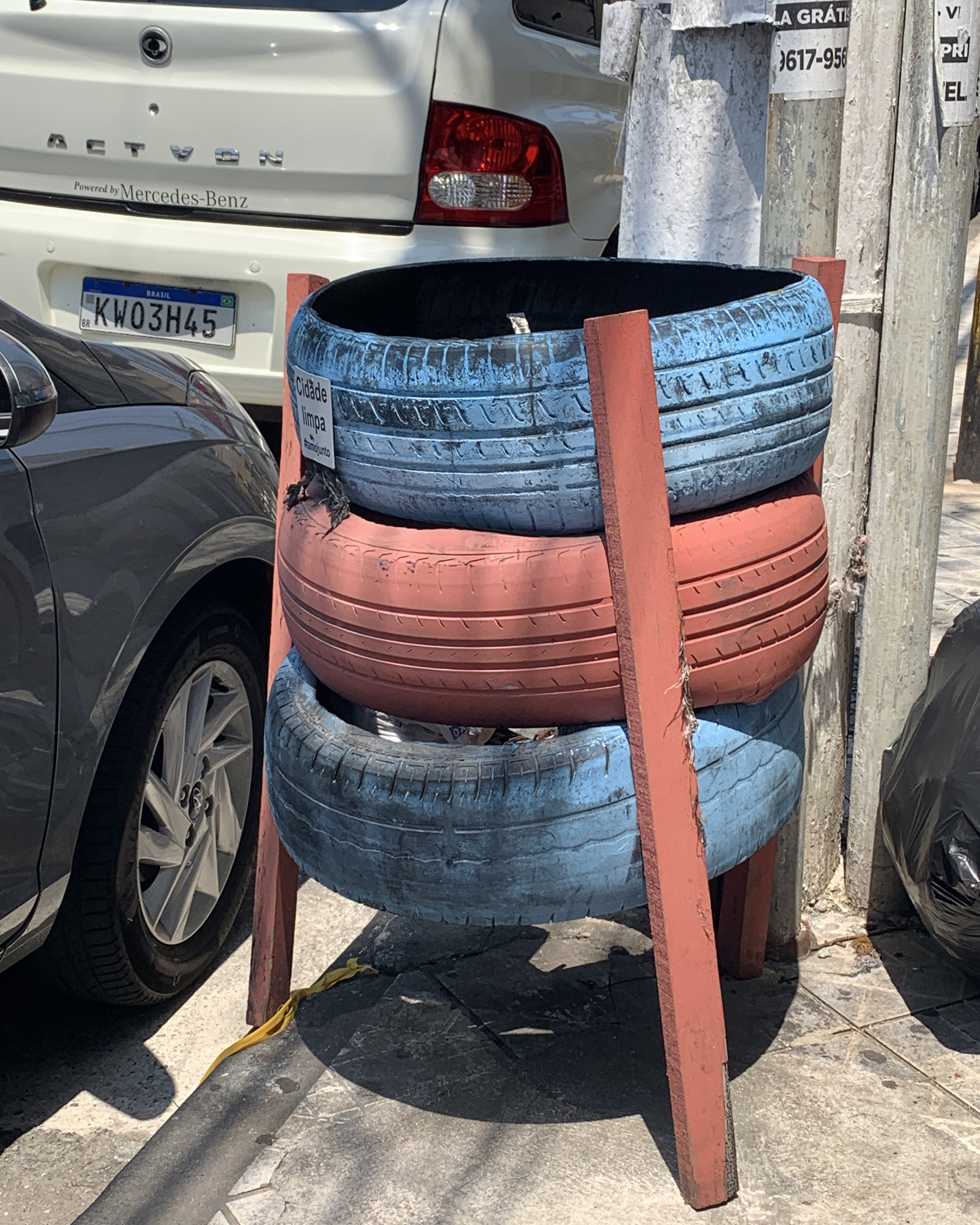
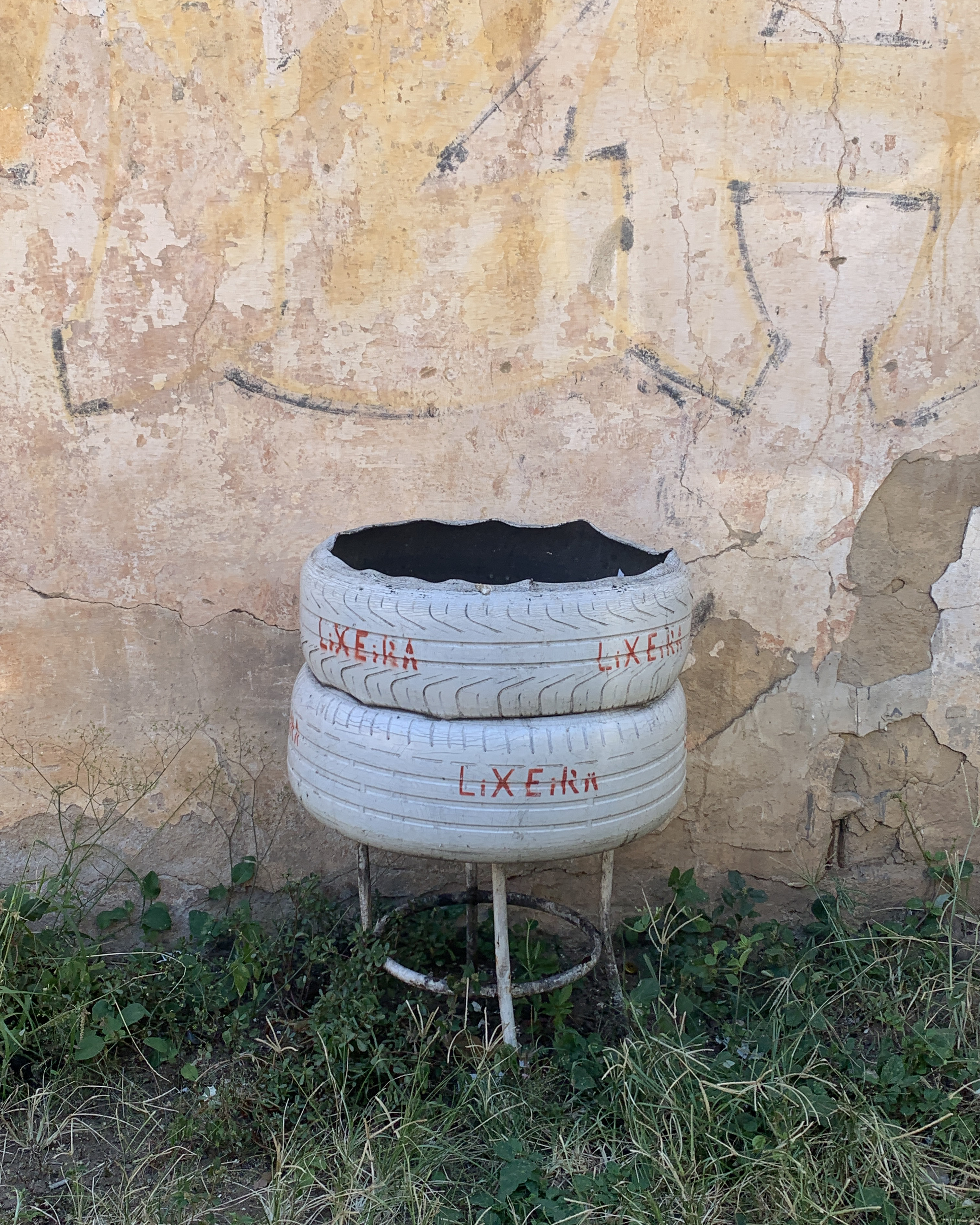
“Designing is fundamental to being human—we design, that is to say, we deliberate, plan and scheme in ways which prefigure our actions and makings”
—Willis, 2006, page 80
Willis states planning as one of the key features of design yet the instances where I felt my design abilities were more explicitly put to the test were times when I had to solve issues with no premeditation or forethought, when, by not having the ideal material or tool, I was challenged to find a solution through unexpected ways. Similarly, the reality of Gambiarra is that it happens spontaneously through improvisation, which Naumann Boufleur explains:
“Improvisation can involve chance, accidental movements, irregularities, lack of planning, preparation or plan”
—Naumann Boufleur, 2013, page 8
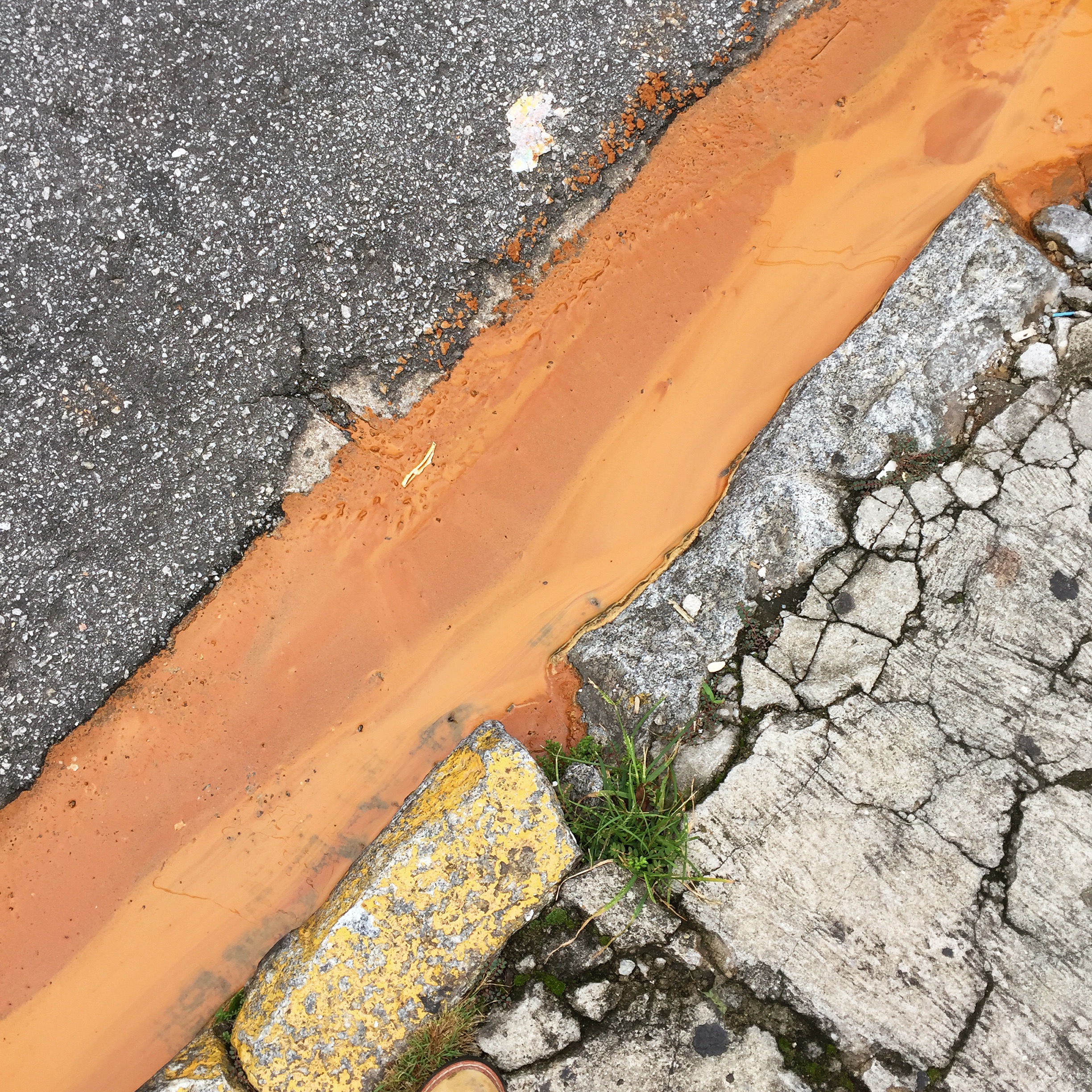

2. Chairs made out of canvas and stretcher bars (Guarçoni, 15 Apr 2019, Havana)
These points are clearly contradictory, but I believe there is something to be said about Gambiarra’s spontaneity; its immediateness is reflective of characteristics that are fundamental to most definitions of design, which is that of problem solving and of innovation (of use of materials and tools in this case). To me this type of resourcefulness is one of the most brilliant iterations of design, a sentiment that I see as being echoed by Escobar’s analysis of cultural critic Ivan Illich in his statement, here simplified, that a limited set of tools and materials could foster diversity of ontologies and stimulate creativity (2015, cited in Escobar, 2018).
It is worthy of mention that this improvisation happens not necessarily by the desire of the creator, but more so by the context in which they find themselves. The idea of Gambiarra is intrinsically linked to a lack of material resources and a scenario of precariousness; this spontaneity of design is simultaneously a spirit that can be seen throughout the culture (Moura Wanderley, 2013) but also a response to a vulnerable socioeconomic reality within a capitalist society (Naumann Boufleur, 2013). It is therefore unsurprising that Brasil is not the only country where these manifestations of vernacular design take place, in fact they are quite common through much of the Global South, but for the purpose of this paper the focus will remain on the Brazilian/Brasileiro territory and expand on its peculiarities and connection to the idea of a national creative identity.
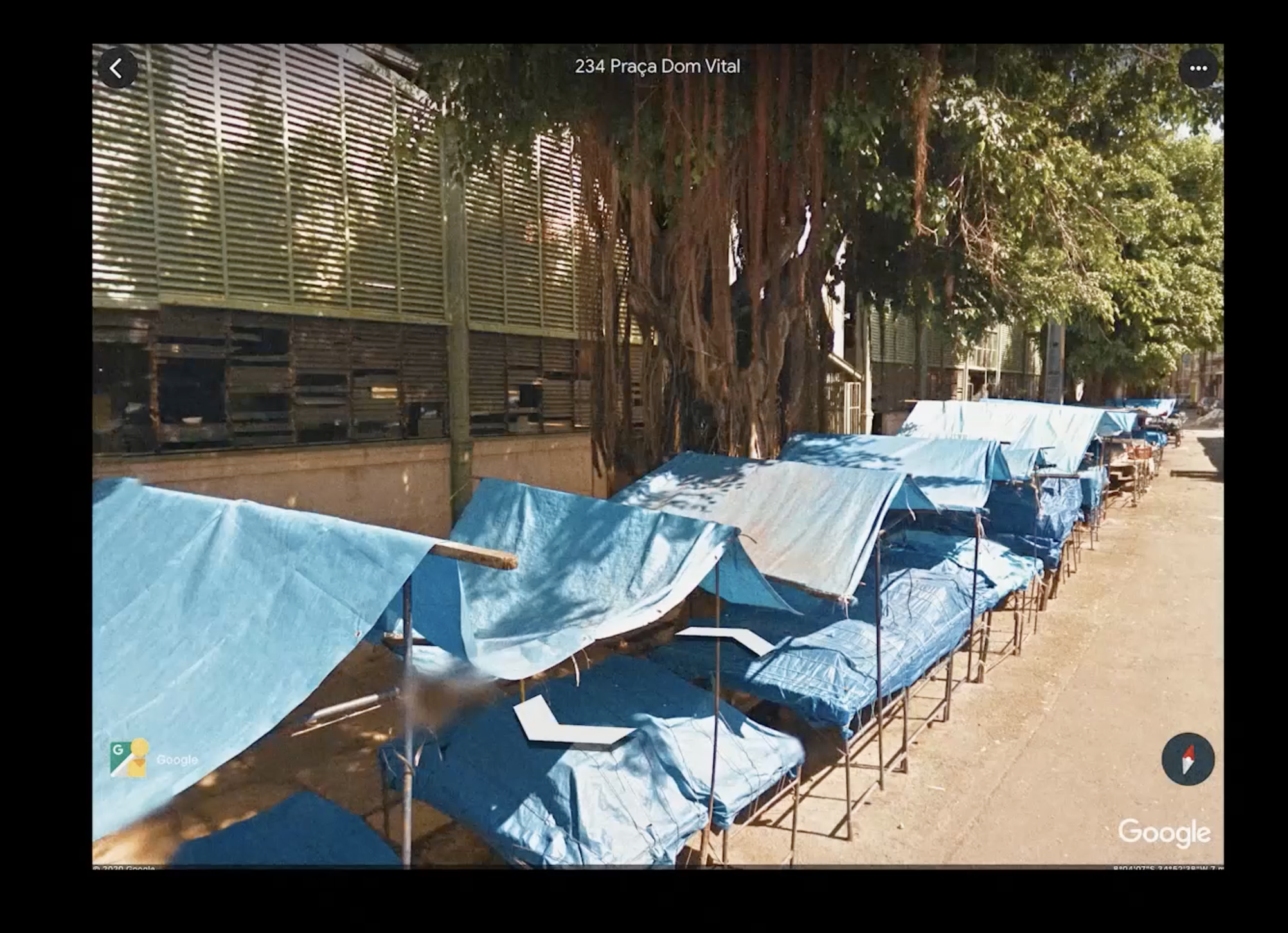

The film “Gambiarra” is a reflection of a society that has improvisation as a politico-economic-structural process. It is an attempt, a misunderstanding, an epistemological ‘swagger’, whose final objective is to make clear that poverty isn’t, nor has it ever been, a condition of degradation in this country.”
—Viana, 2020
As enchanting and poetic as these creative expressions can seem, it is utterly important to not erase the financial hardship imbued in these design solutions and to acknowledge them as forms of resistance to capitalist imposition (Moura Wanderley, 2013; Naumann Boufleur, 2013). These two aspects - rich creative solutions and impoverished social situations - are well exemplified in Maria Cecilia Loschiavo dos Santos’s work with homeless communities where she points out the marginalized and ostracized position these individuals occupy within society with their potential for innovation- “In each of these places the material culture of the homeless reveals their creativity, ingenuity and the spontaneity of their design” (Loschiavo dos Santos, 2014, pp 199)
“‘Out of poverty, poetry; out of suffering, song...’
—a Mexican saying”
—Anzaldúa, 1987, page 65
An Ode to the Gambiarra
Chapter 3—Creative Homecoming

I will open this chapter by clarifying that this paper is speaking to notions of (*)Brasil and not Brazil, a sentiment brilliantly articulated by Blanc and Tapajós (1978) in their song “Quarellas do Brasil” when they boldly stated that “O Brazil tá Matando o Brasil, (...) O Brazil não merece o Brasil, (...) O Brazil não conhece o Brasil” (Brazil is killing Brasil, (...) Brazil doesn't deserve Brasil (...) Brazil doesn’t know Brasil). In such simple lyrics they were able to capture the complex dynamic between Brazil—an exotic tropical place in the global collective subconscious that grew fond of that vision of itself and took it on as a marketable identifier (Karentzos, 2019)—versus Brasil—a country that exists far away from the western gaze and operates within its own parameters, where palm trees are nothing but a place to get water from (Hélio Oiticica, 2014).

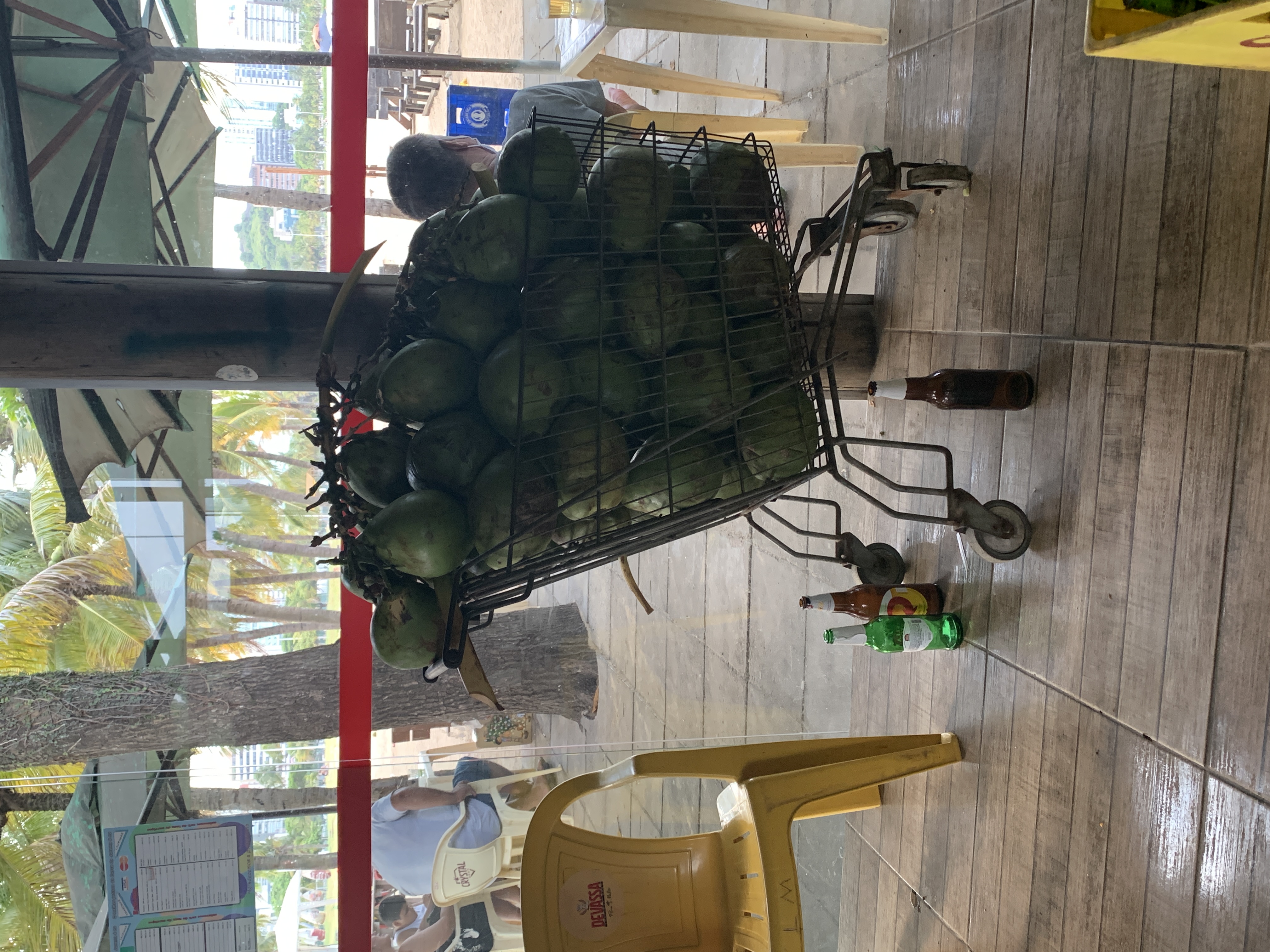

“Brasilidade2 is beautiful! Contrary to Brazil, which was invented, Brasilidade created itself enthralled in the sound of a lot of brega3, resistance, rala bucho4 and a whole lot of irreverence"
—Brazil 1,99, 2020a
2 Indicating state, condition and the quality of being from Brasil - roughly translates to “Brazilianness”.
3 Brega is a genre of popular music in Brasil, typically associated with “low quality” and very marginalized, low in the ‘erudite’ hierarchy of good music—‘brega’ literally translates into “tacky” and “unfashionable” 4 Rala bucho is a colloquial expression from the northeast of Brasil (a region often associated with poverty and uneducation) to indicate dancing - literally translates to “scrape stomach”
With that distinction in mind, it becomes interesting to briefly mention a movement of classically trained artists turning to the Gambiarra with more appreciative eyes after contact with established western institutions. This movement is not situated in historical time but in personal time; a time in one’s career where a ‘creative homecoming’ begins to take place, when after being exposed to an overwhelming saturation of western practices—which is unavoidable within the context of a globalized world that imposes a hegemonic narrative over others (Fry and Kalantidou, 2014; Mignolo, 2018; Escobar, 2018)—one retreats inward searching for the creative essence of one’s roots.
In line with this are works such as the 2020 film “Gambiarra”, who’s co-creator Luiza Herdy returned to Brasil in 2017 after completing her BA in Film Production from the University of the Arts London;


Cao Guimarães’s photographic series from 2000-2014 “Gambiarras” which began two decades into his artistic practice;


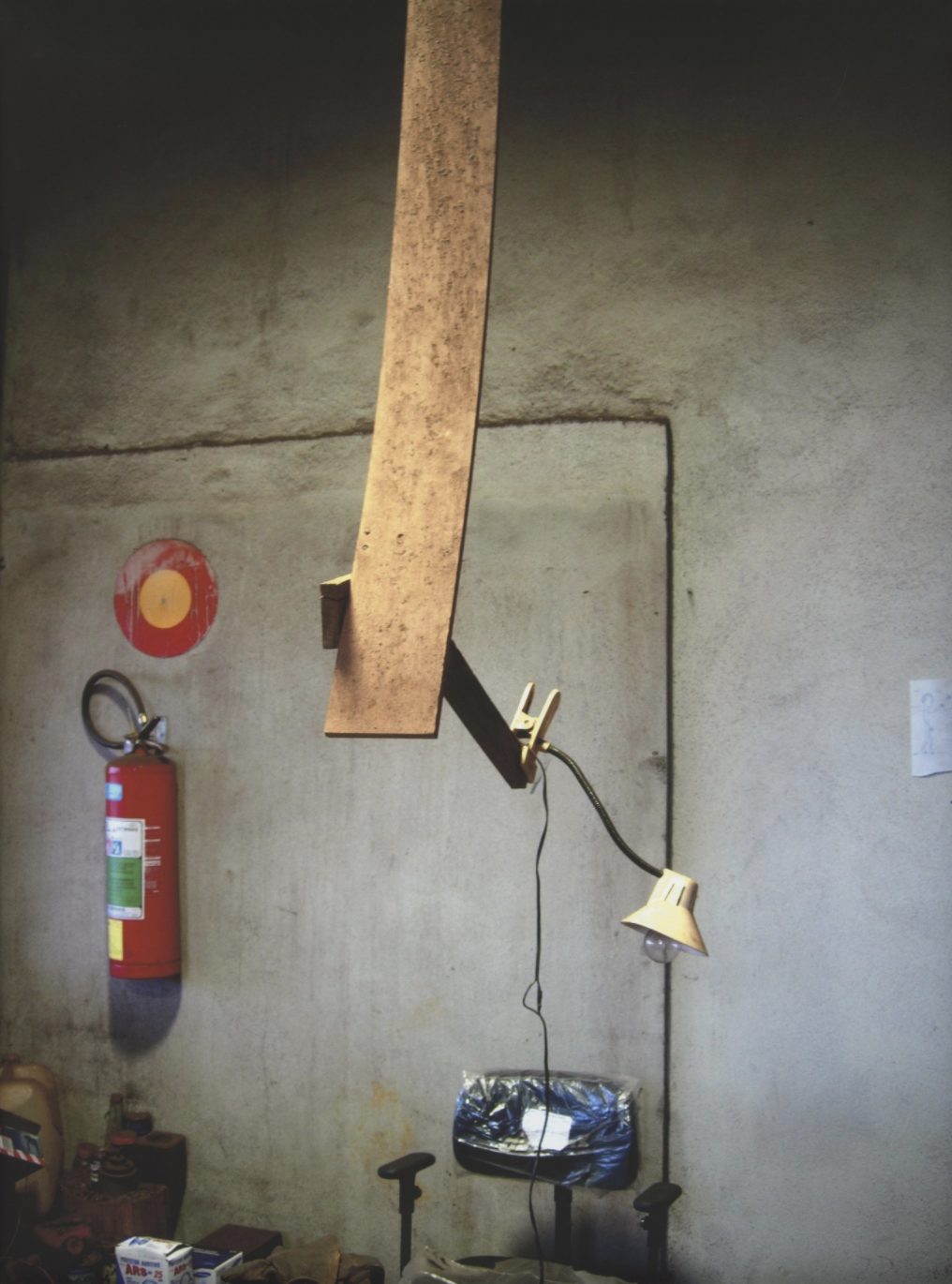




The Campana Brothers oeuvre but especially the “Favela Chair” and “Detonado”;
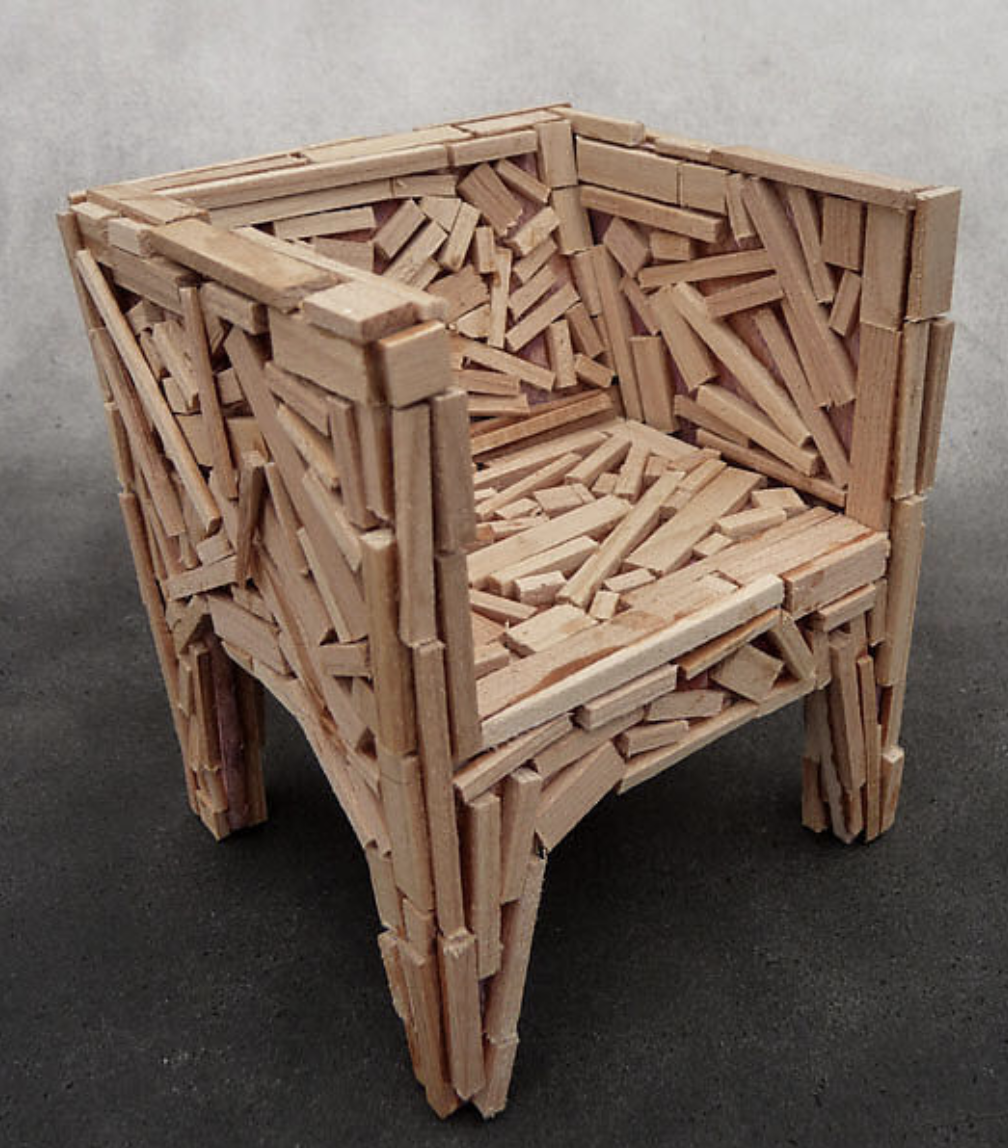
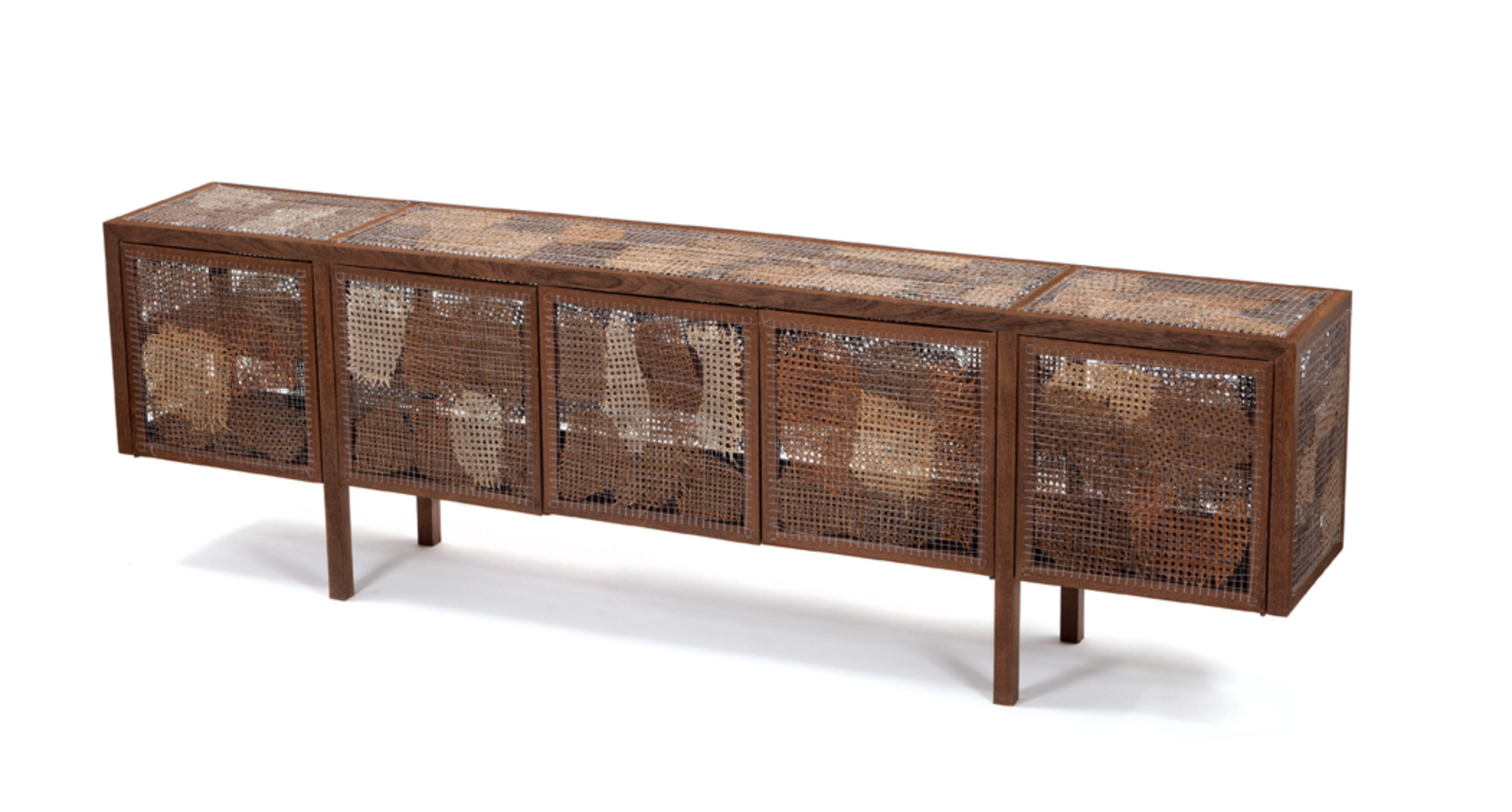
And lastly, but perhaps most pertinent in this case, my own graduate collection which is still in development.

Given that I cannot have the pretense of knowing these artists true intentions nor their feelings about this ‘creative homecoming’, I now speak from both personal experience as well as my own perception of their practices as it parallels my own journey. What I find most notable is not the time between when an artist begins their practice and when this ‘homecoming’ takes place (this can vary greatly) but the fact that this search for an authentic manifestation never comes right away, it isn’t their first work or second or third. It might be obvious that you can only have a homecoming after departing from home, but what I want to emphasize is deeper than that. I am interested in the fact that only after witnessing other perspectives and learning the ‘civilized’ practice do we feel we have the right to return to something so vernacular, so ‘banal’, so ‘unprofessional’ and ‘low-brow’ as it might be seen from western lenses (Escobar, 2018; Fry and Kalantidou, 2014).
“Orlando over Olinda5. Mcqueen over Herchcovitch6. Coq Au Vin over Pato no Tucupi7. What does the gringo have? Did we forget the baiana?8(...) Why do we tend to value more what's foreign if what is national is so rich and colorful? (...)”
—Brazil 1,99, 2020b
5 Orlando, Florida (which is one of the most popular vacation destinations for Brazilians) versus Olinda, Pernambuco (beautiful vacation destination in the northeast of Brasil which is more appreciated by ‘gringos’ than by Brazilians).
6 Alexander McQueen (famous British fashion designers) versus Alexandre Herchcovitch (one of the most renowned Brazilian fashion designers).
7 Coq au Vin (‘fancy’ French dish of chicken braised with wine) versus Pato no Tucupi (traditional Brazilian dish of duck braised with tucupi sauce [manioc root extract] from the Northern region). 8 Reference to Dorival Caymmi song “O que é que a baiana tem” famously performed by Carmen Miranda in a call and answer style asking “what does the baiana have?” and then enumerating their traits and characteristics - ‘baiana’ is a term to refer to women from the state of Bahia but also a cultural almost folkloric figure of a dark skinned wise priestess of afro-brazilian religion.
It is in this way that Gambiarra can be seen as a counterargument, as resistance and even as a healing towards the colonial mentality still existent within the Brazilian territory and deeply ingrained in Brazilian creatives. This mentality states that anything foreign will be better than everything local, it convinces us that there is nothing of value here (Mignolo, 2018), and it can only be found valuable if the West/Global North declares it to be so (usually through the process of commodification since in capitalism profit is the only true value something has) (Escobar, 2018; Kalantidou and Fry, 2014). This disregard for what is local as well as a perception of Gambiarra as something bad, unworthy, suspicious and even shameful are made explicit in the interviews conducted in the film “Gambiarra” (2020).

“Globalisation (...) negates local economic knowledge, practices and values. But at the same time it appropriates anything and everything deemed to be able to be revalorised within the remit of its own economic regime. Nothing that can be exchanged exists beyond the reach of the means of commodification.”
—Kalantidou and Fry, 2014, page 15
By existing outside capitalist parameters Gambiarra can be presented as a self referential idea of Brasilidade and a more genuine expression of Brazilian creativity than anything else proposed until this point. When compared to one of the most monumental points of this quest for a national creative identity—de Andrade’s 1928 Anthropophagic Manifesto where he “called for European influences to be devoured as a way of transforming them into an autonomous Brazilian identity” (Karentzos, 2019, pp 232)—we can argue that Gambiarra is so patriotic that it does not reference Europe at all—it exists independent of it, not as a response to it. Gambiarra is only preoccupied with its own surroundings and not concerned with what is going on an ocean away; it lives in the present of a challenging reality that requires incomparable ingenuity; it is unapologetic for its resourcefulness, nor for its primitiveness. Gambiarra can be seen as the rebellious son of an intellectual Antropofagia.
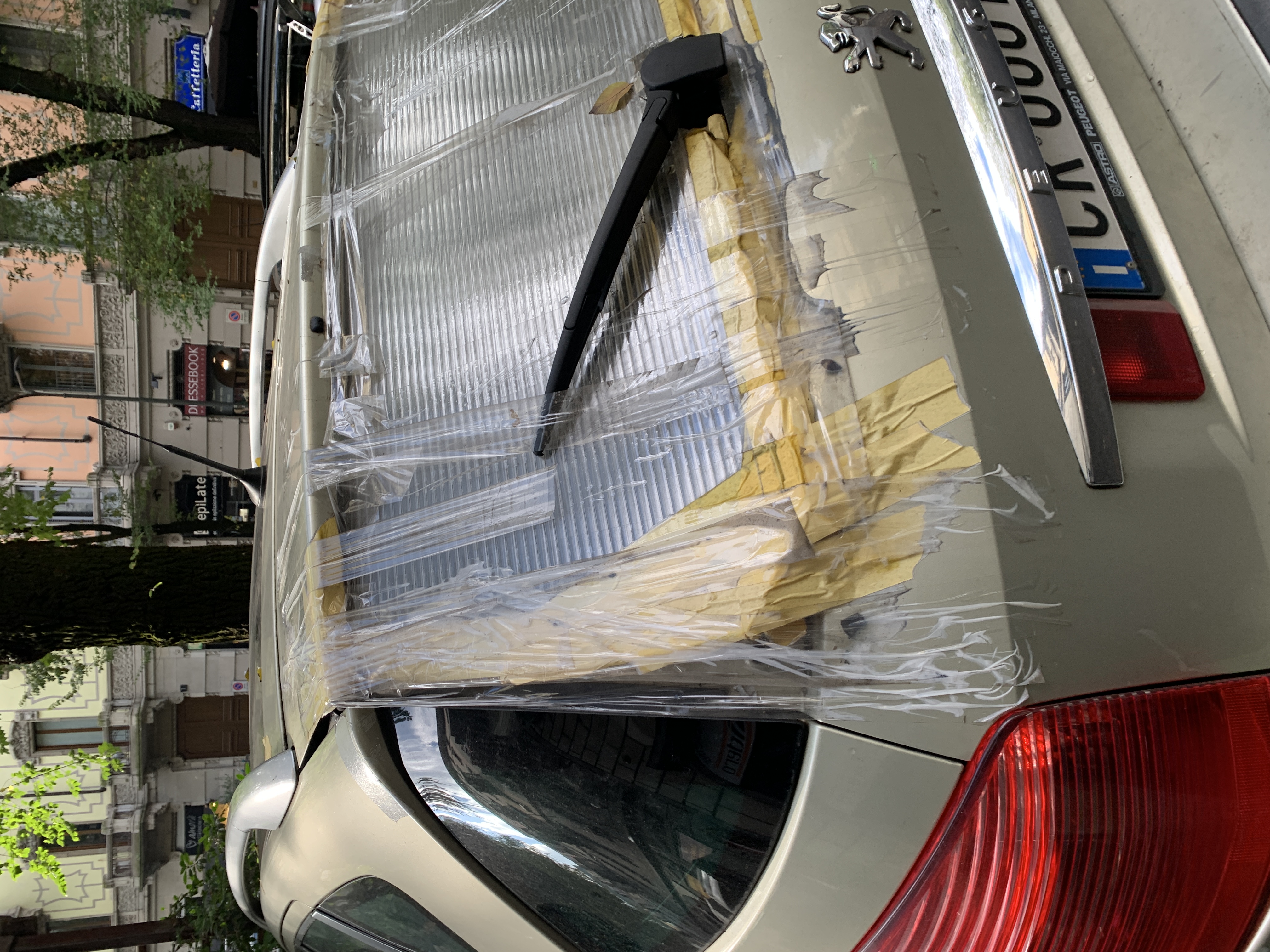
“Gambiarra as expression of the spontaneous creativity and of the creative spontaneity do Brasileiro, a more authentic design than any anthropophagic manifesto could have ever predicted, a manifestation of a collective spirit that transcends any idea of resilience known abroad”
—Guarçoni, Research diary, 26 October 2020
De Andrade began his Anthropophagic Manifesto by stating that “Onlyanthropophagy unites us. Socially. Economically. Philosophically.” (1928, pp 3) and in line with that sentiment I want to argue that “Só a Gambiarra nos liberta. Criativamente. Epistemológicamente. Estruturalmente” (Only Gambiarra liberates us. Creatively. Epistemologically. Structurally.).
An Ode to the Gambiarra
Bibliography
de Andrade, O. (1928) 'Manifesto Antropofago', Revista de Antropofagia, Ano 1 No 1 (May), pp. 3-7. Available at: https://digital.bbm.usp.br/bitstream/bbm/7064/1/4500003 3273.pdf (Accessed: 9 December 2020).
Anzaldúa, G. (1987) Borderlands: The New Mestiza = La Frontera. San Francisco, CA: Aunt Lute Books.
Arablouei, R. and Abdelfatah, R. (2020) The Invention of Race [Throughline Podcast]. 19 November. Available at: https://www.npr.org/transcripts/936346847 (Accessed: 22 November 2020).
Blanc, A. and Tapajós, M. (1978) Querellas do Brasil. Rio de Janeiro, RJ: Universal Music.
Brazil 1,99. (2020a) 'A brasilidade é linda!' [Instagram]. 15 September. Available at: https://www.instagram.com/p/CFKcdPZFBwb/ (Accessed: 28 November 2020).
Brazil 1,99. (2020b) Brazil 1,99. [IGTV] 2 March. Available at: https://www.instagram.com/tv/B9Px2TtlN0p/ (Accessed: 6 January 2021).
DeRose, K. (2005) 'What is Epistemology?' A Brief Introduction to the Topic, Yale Campus Press. Available at: https://campuspress.yale.edu/keithderose/what-is epistemology/ (Accessed: 3 January 2021).
Escobar, A. (2018) Designs for the Pluriverse : Radical Interdependence, Autonomy, and the Making of Worlds. Durham, NC: Duke University Press.
Fry, T. and Kalantidou, E. (eds.) (2014) Design in the Borderlands. New York, NY: Routledge.
Gambiarra (2020) Directed by L. Herdy and S. Drew. Available at: https://vimeo.com/475196548 (Accessed: 22 November 2020).
Helio Oiticica (2014) Directed by C.Oiticica Filho. [Documentary]. Inhotim, MG: Nossa Distribuidora.
Karentzos, A. (2019) 'Traveling Fashion: Exoticism and Tropicalism', in Gaugele, E. and Titton, M. (eds.) Fashion and Postcolonial Critique. Berlin: Sternberg Press, pp. 230-245.
Krenak, A. (2019) Ideias para adiar o fim do mundo. São Paulo, SP: Companhia Das Letras.
Lorde, A. (1984) ‘The Master’s Tools Will Never Dismantle the Master’s House’ in: Sister Outsider: Essays and Speeches. Berkeley, CA: Crossing Press, pp.110–114.
Loschiavo dos Santos, M.C. (2014) ‘A Note from Brazil: looking at the production of design knowledge in Brazil’, in: Fry, T. and Kalantidou, E. (eds.) Design in the borderlands. New York, NY: Routledge, pp. 199–205.
Mignolo, W. (2018) 'Eurocentrism and Coloniality: The Question of Totality of Knowledge', in Walsh, C. and Mignolo, W. (eds.) On Decoloniality: Concepts, Analytics, Praxis. Durham, NC: Duke University Press, pp 194-210
Mignolo, W. and Walsh, C. (2018) On Decoloniality : Concepts, Analytics, Praxis. Durham, NC: Duke University Press.
Moura Wanderley, I. (2013) O Design dos "Outros": Interações Criativas na Produção Contemporânea de Artefatos. PhD Thesis. Faculdade de Arquitetura e Urbanismo na Universidade de São Paulo. Available at: https://www.teses.usp.br/teses/disponiveis/16/16134/tde
05022014110055/publico/IngridWanderley.pdf (Accessed: 17 December 2020).
Naumann Boufleur, R. (2013) Fundamentos da Gambiarra: A Improvisação Utilitária Contemporânea e seu Contexto Socioeconômico. PhD Thesis. Faculdade de Arquitetura e Urbanismo na Universidade de São Paulo. Available at: https://teses.usp.br/teses/disponiveis/16/16133/tde-02072013-134355/publico/Fundamentos_Gambiarra_Rodrigo_Boufleur_Revisada.pdf. (Accessed: 23 December 2020).
Sobande, F. (2018) 'Accidental Academic Activism - Intersectional and (Un)intentional Feminist Resistance', Journal of Applied Social Theory: Special Edition: Futures and Fractures in Feminist & Queer Education, 1(2). Available at: https://socialtheoryapplied.com/journal/jast/article/view/60/77 (Accessed: 26 November 2020).
Viana, I. (2020) 'Gambiarra', Amarello. Available at: https://amarello.com.br/2020/ 11/arte/cinema/a-gambiarra/ (Accessed: 4 December 2020).
Willis, A.M. (2006).‘Ontological Designing’, Design Philosophy Papers, 4(2). Available at: https://www.academia.edu/888457/Ontological_designing [Accessed 23 Nov. 2020].
︎︎︎Back to Index